“Everyone deserves to be treated with dignity. Everyone deserves to not be defined by the worst thing they’ve done.”
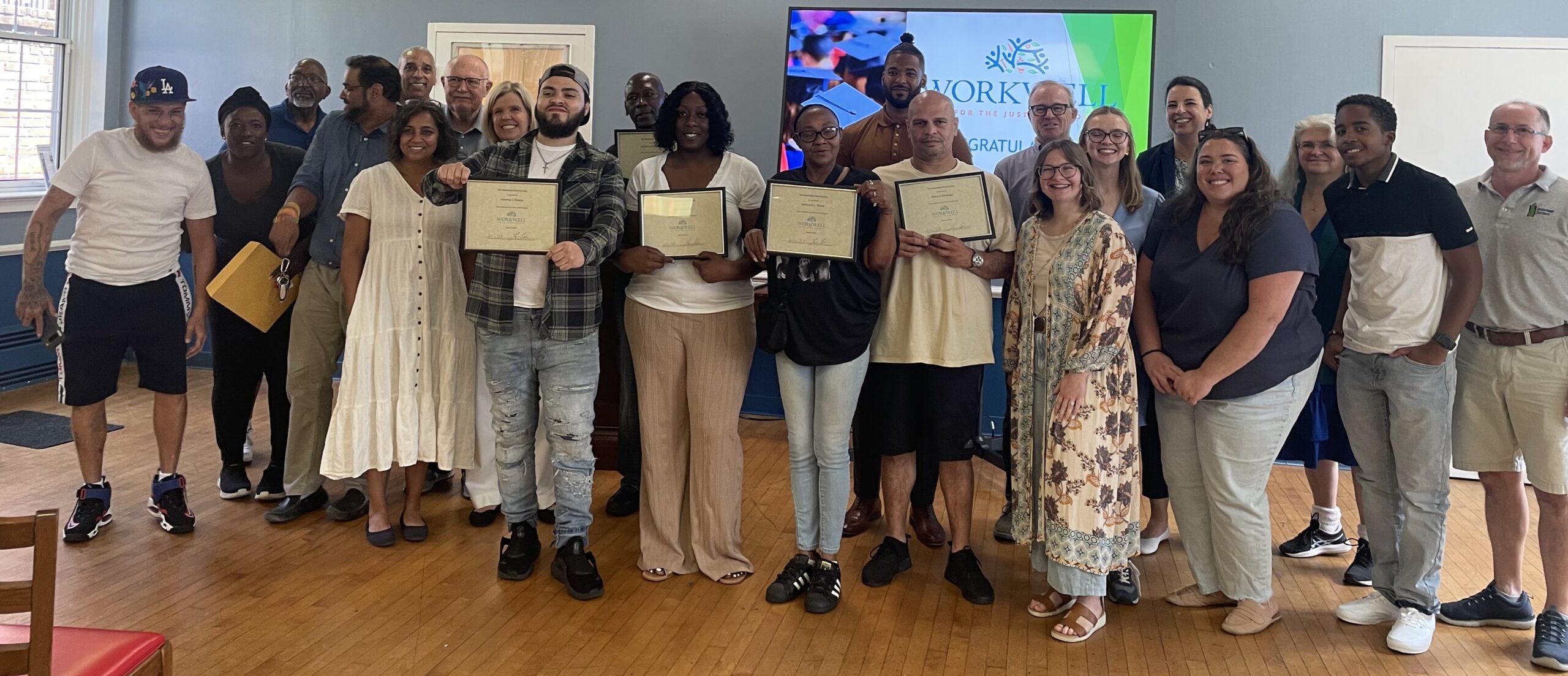
That simple but powerful lesson is one that three college students will carry with them long after their summer at The WorkWell Partnership.
Each year, WorkWell welcomes interns who want to learn more about criminal justice, nonprofit leadership, and community service. This summer, Claire Tamagni, Alexandria Brown, and Alex Lindgren discovered something even more meaningful: the life-changing impact that hope, compassion, and meaningful work can have on people rebuilding their lives after incarceration.
A Mission That Changes Lives
The WorkWell Partnership exists to equip people transitioning from involvement with the justice system with the job skills, confidence, dignity, and support they need to build stable, productive lives. The need for programs like WorkWell has never been greater. Without structured reentry support, unemployment among formerly incarcerated individuals is approximately five times higher than the general population. Yet 58% of WorkWell graduates secure employment within nine months, more than double the typical employment outcome for this population.
More Than Finding a Job
The WorkWell interns quickly realized that its program offers much more than résumé assistance and interview preparation. Claire, a double major in criminology and psychology, was drawn to the program because she had never seen another organization serving justice-involved individuals in quite this way. “I think one of the most valuable parts of WorkWell is what participants don’t expect,” she explained. “People come because they want a job, but they leave with skills that help them keep a job.” She observed participants openly discussing mental health, communication, personal experiences, nutrition, healthy sleep habits, and other life skills that are often overlooked but are essential for long-term success. “It reminded me of the ‘hidden curriculum’ people talk about in college,” Claire said. “There are things people are just expected to know, but nobody ever teaches them.”
A Family, Not Just a Program
Alexandria Brown, a political science major planning a career in nonprofit leadership, was struck by the close-knit atmosphere created by WorkWell’s small staff. “The small size of the program creates a sense of family,” she said. She also discovered the remarkable network of employers, volunteers, churches, community organizations, and supporters working together to help participants succeed. “I didn’t realize
how many companies and people were working together to support WorkWell.” Helping participants improve their résumés became one of her favorite experiences. “They were all very friendly,” she said. “It was fun to help.”
Learning Through Relationships
Alex Lindgren entered the internship hoping to work with returning citizens. By the end of the summer, she knew she had found her future career. “This cemented that this is what I want to do,” she said. “Helping people during reentry is such an important part of rebuilding their lives.” One of her favorite moments came when she and Claire led a class together. “The participants actually engaged with us,” she recalled. “It made us realize the relationships we’d built and that what we were teaching really mattered.” The interns also helped update WorkWell’s curriculum; Alex enjoyed making topics like cognitive distortion—the kind of thinking that makes one failure seem like a forever failure—easier to understand. These lessons help participants recognize unhealthy patterns of thinking that can influence decision-making and employment success.
Seeing Beyond the Stigma
Perhaps the greatest lesson each intern learned had little to do with criminal justice textbooks. Working alongside participants helped replace assumptions with understanding. Claire gained a deeper appreciation of the lasting effects incarceration can have on mental health. “One participant shared that he becomes anxious whenever someone walks into a room because he’s afraid he’ll be attacked,” she said. “It’s something I never would have thought about.” She also noted that trauma experienced by formerly incarcerated individuals is often met with judgment rather than compassion. Alexandria said the internship made her far more empathetic. “I didn’t realize how many employers simply won’t hire people with records,” she said. “It’s truly hard for them to do the right thing.” For Alex, listening to participants’ stories changed everything. “I made great relationships and learned firsthand about people’s lives,” she said. “Everyone deserves a second chance. Everyone deserves dignity. Helping people get back into society helps all of us.”
Small Moments That Leave a Lasting Impact
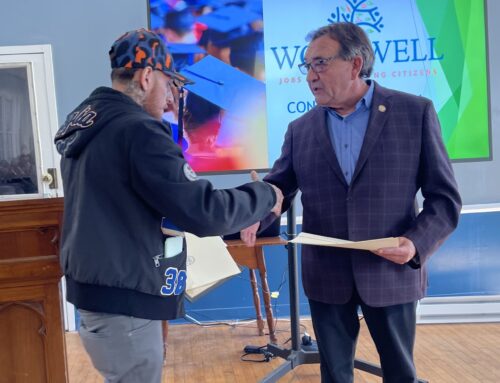
Some of the most meaningful experiences came through simple acts of kindness. Claire remembers helping one participant create a résumé. At graduation, he pulled her aside to personally thank her. “I didn’t realize something so routine for me could make such a difference for someone else.” Another participant surprised the interns by bringing homemade banana pudding to class. Alex remembers that moment vividly. “Even though she was going through so much herself, she took the time to make something for us. That meant a lot.” Those relationships reminded the interns that every participant brings strengths, talents, and generosity—qualities too often overlooked because of a criminal record.
Advice for Future Interns
When asked what they would tell next year’s interns, their advice was remarkably consistent. Claire encourages students to arrive with curiosity. “Every day is different. Be open-minded, ready to learn, and ready to help.” Alexandria recommends looking for every opportunity to contribute. “The pace changes every day. Find where you can be most helpful.” Alex believes relationship-building is the key. “Get to know the participants. Ask them about their favorite movie or what they like to do. Make them feel welcome. Many haven’t been treated with the respect that others have. Those conversations matter.”
Why WorkWell Matters
Each intern left convinced that programs like WorkWell are essential. Claire says, “If we want people to become productive members of society, we have to invest in programs that give them the resources to succeed.” Alexandria hopes more people will experience WorkWell firsthand.
“Come visit for a morning. Watch a class. See the mock interviews. Seeing participants grow is incredibly inspiring.” Alex agrees. “The results speak for themselves. People leave with interviews, jobs, and life skills they’ll carry forever. The curriculum teaches things many people
were never taught—communication, time management, customer service, and confidence. It works.”
Join Us
Every day, The WorkWell Partnership helps people rewrite their stories through meaningful work, supportive relationships, practical skills, and hope. Whether you choose to volunteer, mentor, hire graduates, or make a financial contribution, you become part of a community that believes every person deserves the opportunity to succeed. Together, we are restoring dignity, strengthening our communities, and proving that second
chances create brighter futures for everyone.
Contact The WorkWell Partnership
www.workwellpartnership.org
609-802-5678
info@workwellpartnership.org
Mailing Address:
2688 Main Street
Lawrenceville, NJ 08648
Training Location:
219 E. Hanover Street, 3rd Floor
Trenton, NJ 08611